
Would You Hire the Leader You Were Ten Years Ago?
Let’s go back to August 2016…
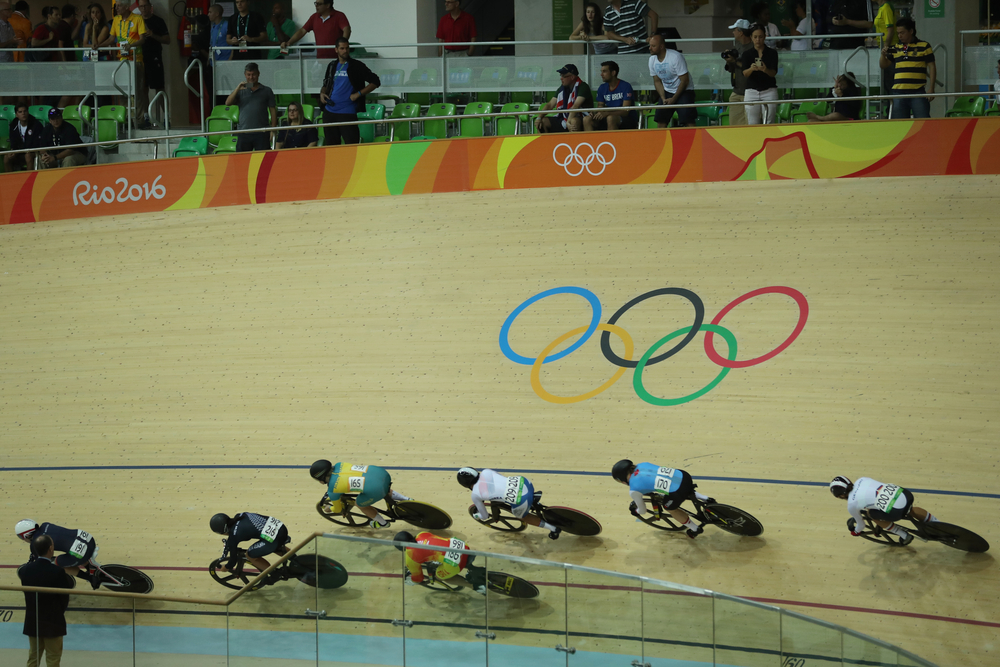
The Rio Olympics were under way. Pokémon Go had people wandering through parks searching for virtual creatures, while Theresa May had recently become Prime Minister following the Brexit referendum. TikTok had yet to appear on our phones, Zoom was a niche business tool that few people had used, and although artificial intelligence already existed, it was quietly powering software in the background rather than helping millions of people write, research and create every day.
The workplace looked very different too. Most people travelled into the office every morning, executive teams gathered around boardroom tables and important conversations happened face to face. Flexible working was the exception rather than the norm, and being visible in the office was still widely associated with commitment and productivity.
Organisations also viewed change differently. Five-year strategic plans provided reassurance, digital transformation was frequently treated as a technology programme, and sustainability often sat within a corporate responsibility report rather than influencing discussions about strategy, resilience and growth. Many organisations still believed that change happened in manageable phases: create the plan, deliver the transformation and then return to business as usual.
Looking back, 2016 doesn’t feel that long ago. Yet from a leadership perspective, it might as well belong to a different era.
Think about the leader you were then
You may have held a different role, managed a smaller team or still been working towards the position you have today. Like many ambitious leaders, you may have built your reputation by solving problems quickly, making confident decisions and personally ensuring that important work was delivered.
For many organisations, strong leadership was closely associated with certainty, expertise and control. Credibility often came from having the answer, making the decision and stepping in whenever others became stuck. Those qualities delivered results, built careers and helped many leaders reach senior positions.
There is nothing inherently wrong with those behaviours. In fact, they may be exactly why you enjoy the success you have today.
The more interesting question is whether they remain sufficient. The leadership environment has changed so significantly that many of yesterday’s strengths now need to be applied very differently.
A different leadership environment
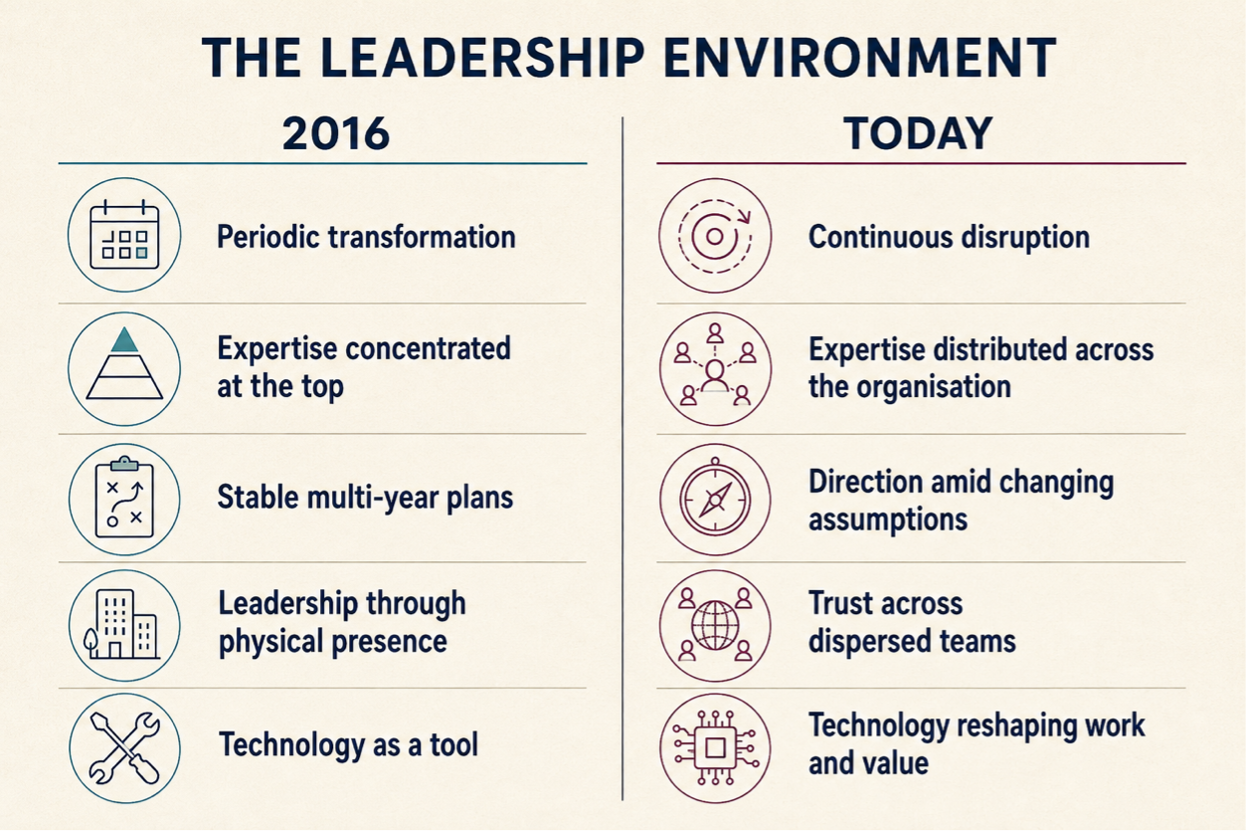
The fundamentals of leadership have not changed. Judgement, integrity, courage and accountability remain as important today as they were ten years ago. What has changed is the context in which those qualities must be exercised.
A decade ago, possessing the greatest expertise often created authority. Today, no individual can possibly hold all the knowledge required to respond to the speed and complexity facing modern organisations. Effective leaders increasingly succeed by bringing together diverse perspectives, encouraging constructive challenge and enabling better decisions than any one individual could reach alone.
Planning has evolved in a similar way. Leaders still need to create direction and clarity, but they must also help organisations adapt when assumptions change or unexpected events render parts of the plan obsolete. Success is no longer measured simply by how closely people follow the original roadmap, but by how effectively they respond when the map itself changes.
Leadership visibility has also been redefined. Trust can no longer depend on physical presence or regular contact in the office. Leaders are expected to build engagement, connection and culture across hybrid teams, different generations and multiple working patterns, often without sharing the same physical space.
Decision making has become equally important. Organisations require speed, but sustainable speed cannot depend on one leader making every significant decision. Instead, today’s leaders build the judgement, confidence and capability of others so that decisions are made closer to customers, operations and emerging challenges.
At the same time, technology and sustainability have moved from supporting topics to strategic priorities. AI is beginning to reshape roles, expertise and business models, while environmental and social considerations now influence investment decisions, organisational resilience and long-term competitiveness.
Leadership today is therefore less about having every answer and more about creating the conditions in which the organisation can continuously learn, adapt and perform.
When Strengths become Constraints
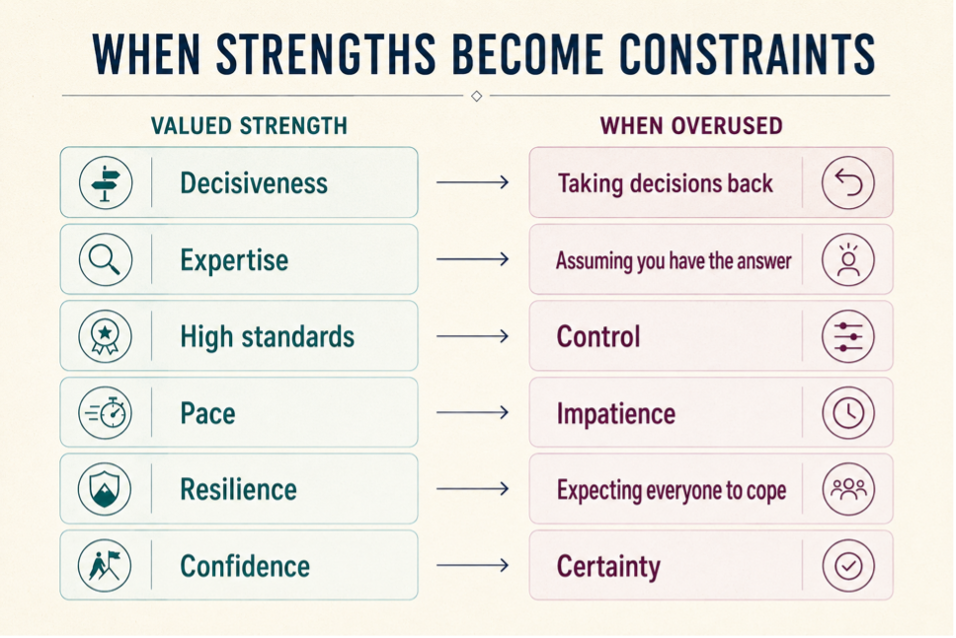
The greatest challenge for experienced leaders is rarely learning something entirely new. More often, it involves recognising when behaviours that previously delivered success begin to limit future performance.
Our strengths naturally become part of our professional identity. They are rewarded, reinforced and repeated until they become habitual. Because they have consistently worked, they rarely feel like weaknesses.
Over time, however, even positive qualities can become overused. Decisiveness can become an unwillingness to let others work through problems for themselves. Expertise can become the assumption that experience always provides the best answer. High standards can become excessive control, while pace can become impatience. Resilience may gradually evolve into an expectation that everyone else should simply cope, and confidence can become certainty precisely when curiosity is needed most.
The leader who insists on remaining the primary source of answers may unintentionally slow an organisation where knowledge is widely distributed. Likewise, the leader who personally drives every significant decision can become a bottleneck in an environment that requires fast, informed decisions to be made throughout the organisation.
Many leaders continue to work exceptionally hard and deliver impressive results. The challenge is that they may be solving today’s problems with a leadership model that was designed for yesterday’s conditions.
Would you hire them now?
Imagine the leader you were in August 2016 arriving for an interview today. They may be talented, ambitious and highly capable. They may bring considerable expertise, move decisively and have an impressive record of delivery. Ten years ago, those qualities may have made them an exceptional appointment.
But would they be enough for the role you are recruiting for today?
Could they lead when the most relevant expertise sits elsewhere in the organisation? Could they create direction without offering false certainty? Could they build commitment among people they rarely meet, distribute authority without losing accountability, and rethink work and value in response to AI rather than simply introduce another technology programme?
Could they lead through continuous disruption without becoming the organisation’s principal decision-maker, problem-solver and source of momentum?
You would not expect your organisation to operate with the same technology, customer insight or business model it used in 2016. Nor would you appoint someone today solely because they met the leadership specification of that time.
At Executive Insights 360, we help leaders and executive teams identify the capabilities their organisations need next and examine whether the leadership that created past success is equipped to deliver it.